1
Your camera is guessing
What the light meter actually does, the three situations where it reliably gets it wrong, and how exposure really works. You leave in Aperture Priority.
Photography course · Beirut · Arabic & English
A three-week photography course for people who own a camera and never left automatic mode.
You will never shoot on auto again — and you will know why. Six live sessions, twenty seats. Next group dates: TBA.
The honest version
Automatic mode is a machine making decisions on your behalf, and it does not know what your photograph is about. It does not know the light behind your subject is the point. It does not know you wanted the background soft, the water frozen mid-air, or the room to stay dark because dark was the mood.
So it averages everything out and hands you something technically acceptable and completely anonymous. Then you look at the result and assume the camera was not good enough.
The camera is fine. Nobody ever showed you which decisions were yours to make.
It took me ten years to work that out on my own, without a school and without a shortcut. This course is the short version — the parts that mattered, in the order I wish I had learned them.
Every session takes one decision away from the camera and gives it to you. You shoot between every class, and every class opens with your photographs on screen.
What the light meter actually does, the three situations where it reliably gets it wrong, and how exposure really works. You leave in Aperture Priority.
Deciding what the viewer looks at. Depth of field, why the small number is the big opening, and how to stop letting the camera choose your subject.
Freezing a moment the eye could never hold — and using blur on purpose. Panning, motion, and why half your photographs are secretly soft.
The most valuable hour of the course. Hard and soft, front, side and back, reading a room, and why one window beats most studio kit.
Past the rule of thirds. Background discipline, negative space, and the difference between taking one frame and working a scene.
Your best work on screen, discussed honestly. How to select and cull your own photographs, and the personal project that keeps you improving after this ends.
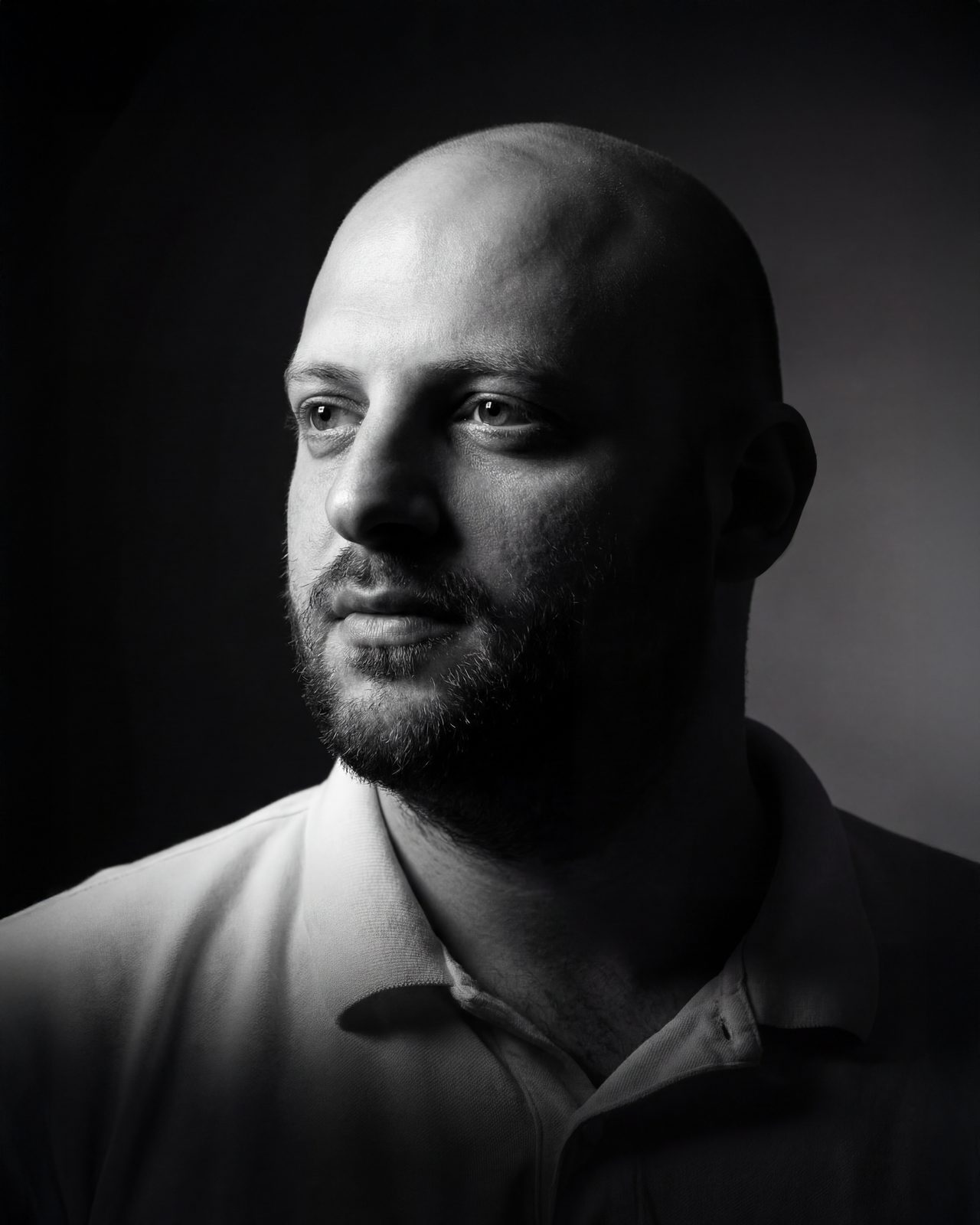
I am a working commercial photographer in Beirut. I shoot food, drink and tabletop work for brands — photography where the light has to be right the first time and a client is waiting on the other side of it.
But I never went to photography school. I started as a hobbyist shooting landscapes, moved into product, then food, and ended up in tabletop, which is what I am still exploring now. Every bit of it came from experimenting: shoot, fail, work out why, shoot again. Ten years of that.
I don't follow the textbook they teach in school. I have my own way of understanding the technical side of a picture.
That is deliberate, and it is the reason this course works for people who have already tried and failed to learn from tutorials. I am not reciting a syllabus I was handed. I am giving you the mental model I had to build myself, in the order that would have saved me the most time.
I am not teaching you to copy my photographs. I am teaching you to decide, deliberately, what yours are about — and then to make the camera do it.
Currently shooting at MMNT Productions in Beirut.
The whole group course. Six live sessions, six assignments, and a full critique of your work through a student rotation.
Prefer a private course?
The complete six-session OFF AUTO course is also available privately for $350 total, for one person or a close group of friends. Direct WhatsApp access for photography questions and advice is included.
Explore private tutoringWhish, OMT or bank transfer. Joining the interest list is free. Once dates are announced, we confirm your place and payment details in the chat.
Any DSLR or mirrorless camera with a mode dial — the one with A, S and M on it. It does not need to be new or expensive. The camera you already own and do not understand is the perfect camera for this course.
If you only have a phone, this is not the right course for you yet. Tell me anyway and I will let you know when there is one that fits.
None. This is the beginner course and it assumes you are shooting on automatic. If you already work confidently in manual, skip it — FOOD 101 is where you want to be.
Both, the way everyone in Beirut actually speaks. The technical terms stay in English because that is what is printed on your camera and in its menus — but everything gets explained in Arabic.
Live on Google Meet, so you can join from anywhere in Lebanon. Each group session runs for an hour.
Dates and session times: TBA. Join the interest list to hear when the next group is scheduled.
Tell me in advance and I will catch you up. But this is a live course built on your homework being critiqued — miss more than one and you will lose the thread. If you cannot commit to all six sessions, wait for the next round rather than waste your money.
Yes, and it is the actual course. A short shooting assignment after every session, posted to our group. You are not paying for information — you are paying for someone to look at your photographs and tell you what is wrong with them. That only works if you shoot.
Three courses, in order. Each one assumes the last.
Introduction to photography. Get off automatic and start deciding.
Commercial food photography. Finish with six portfolio images and the knowledge to price the job.
Strobes and commercial retouching. Build the light instead of finding it.
Tell me what camera you have and what you would like to learn. I will let you know when the next group dates are announced.